
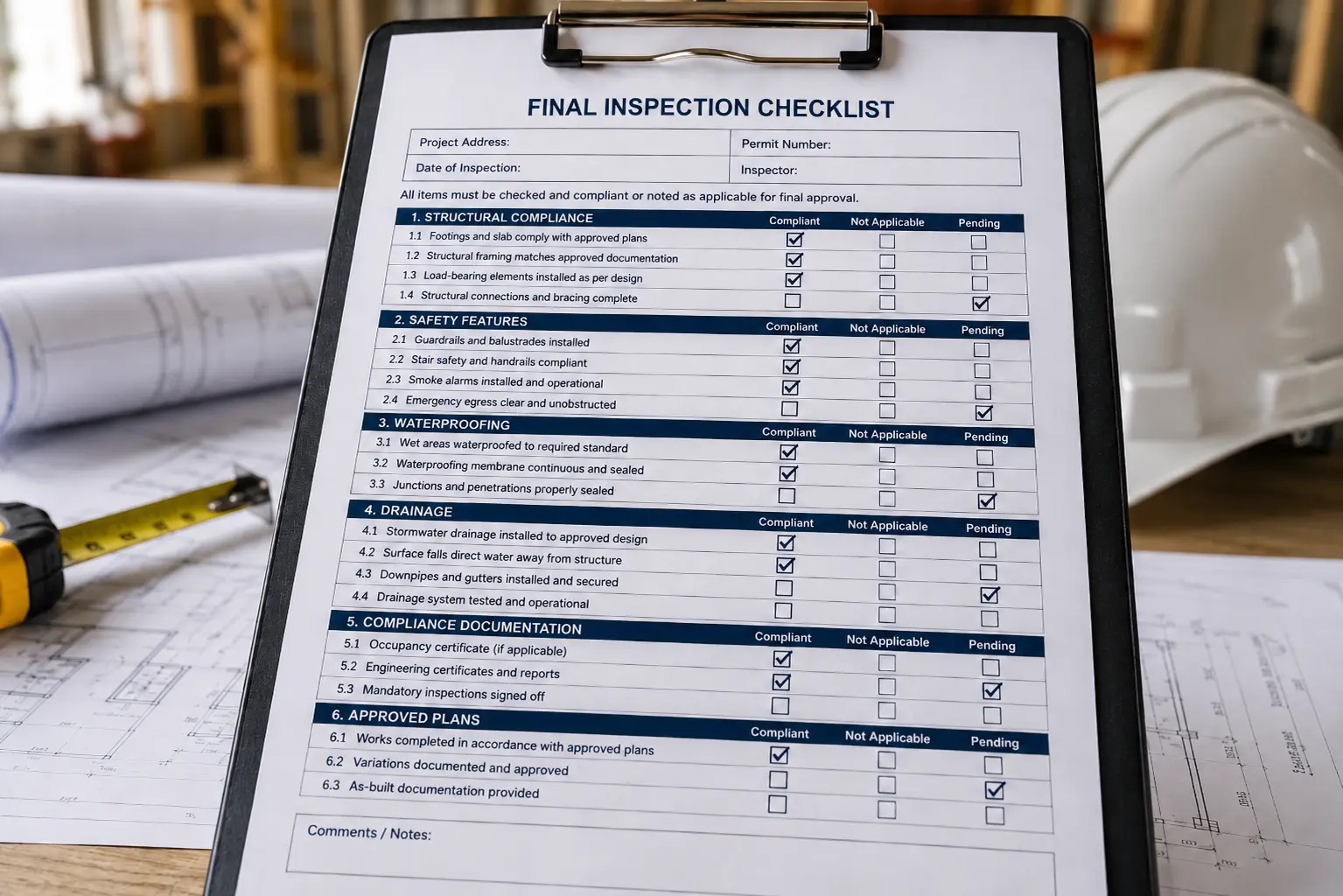
Certifier Final Inspection Checklist for Sydney Homeowners
The final inspection is one of the last steps before your project can be signed off.
Your building certifier needs to confirm the building work is complete, safety requirements have been met, and the required documents have been provided before an Occupation Certificate can be issued. This final stage forms part of the broader construction certification process that applies throughout the project.
Many final inspection delays are caused by missing paperwork, unfinished site works, or small compliance issues that could have been fixed earlier. This is common on renovation projects where approved plans, certificates, and inspection requirements can be overlooked during construction.
We’ll explain below what certifiers check, the documents you'll usually need, and how to prepare for a smoother final inspection.
What Does a Certifier Check at Final Inspection?
At a final inspection, a certifier checks that the completed work matches the approved plans, key safety requirements have been met, and all required compliance documents have been provided. The goal is to confirm the project is ready for Occupation Certificate assessment.
The exact requirements vary between projects, but most final inspections focus on the following areas:
Structural Compliance
The certifier checks that the completed building work is consistent with the approved plans and supporting engineering documentation. This may include structural elements, framing, load-bearing components, and any work that required engineering certification.
Safety Features
Safety items are a major part of the final inspection. The certifier may review:
- Smoke alarms
- Balustrades
- Stairs and handrails
- Safety glazing
- Access and exit pathways
These items help ensure the home can be used safely and comply with the relevant building requirements, including provisions of the National Construction Code (NCC).
Waterproofing and Drainage
Water-related issues can cause significant problems if they aren't addressed properly.
The certifier may check:
- Waterproofing certificates
- Drainage works
- Stormwater systems
- Site grading
- External water management
Compliance Documentation
The physical building work is only part of the process. The certifier also needs evidence that the work complies with relevant requirements.
Common documents include:
- Waterproofing certificates
- Plumbing certificates
- Electrical certificates
- Engineering certificates
- BASIX documentation
- Survey reports
Consistency With Approved Plans
The certifier checks that the finished project matches the approved plans and any approved amendments.
If significant changes have been made during construction and those changes were not approved, additional information or approvals may be required before final sign off can proceed.
While every project is different, the table below summarises the main areas most certifiers review during a final inspection.
| Inspection Area | What the Certifier Checks |
| Structural Compliance | Structural work matches approved plans and engineering requirements |
| Safety Features | Smoke alarms, balustrades, stairs, handrails, safety glazing, and access requirements |
| Waterproofing and Drainage | Waterproofing works, drainage systems, stormwater management, and site grading |
| Compliance Documentation | Plumbing, electrical, engineering, BASIX, and other required certificates |
| Approved Plans | The completed work matches approved plans and approved amendments |
Common Reasons Final Inspections Are Delayed
Most final inspection delays come down to a handful of common issues. In many cases, the building work is largely complete, but missing documents or unfinished compliance items prevent the Occupation Certificate process from moving forward.
Common causes of delays include:
- Missing waterproofing certificates
- Missing plumbing or drainage certificates
- Incomplete stormwater works
- Missing engineering certificates
- Smoke alarm compliance issues
- Unapproved changes from approved plans
- Incomplete stairs, handrails, or balustrades
- Pool barrier compliance issues
- Missing BASIX documentation
- Unsafe or unfinished site conditions
One of the most common mistakes homeowners make is assuming their builder or trades have already supplied all required certificates. Then the final inspection is booked and someone discovers the waterproofing certificate, drainage sign-off, engineering documentation, or BASIX paperwork is still outstanding.
Before booking the inspection, it's worth confirming that both the building work and supporting documents are complete. Doing so can help avoid delays, additional inspections, and unnecessary stress at the end of the project.
What Documents Are Required Before an Occupation Certificate?
The exact documents required will depend on your project. However, most certifiers will request evidence that key building work has been completed and complies with relevant requirements.
Common documents include:
- Waterproofing certificates: Confirm waterproofing work has been completed correctly in wet areas such as bathrooms, laundries, and balconies.
- Plumbing and drainage certificates: Verify plumbing and drainage installations comply with applicable requirements and have been completed by appropriately licensed trades.
- Electrical compliance certificates: Confirm electrical work has been carried out safely and meets relevant standards.
- Structural engineering certificates: Demonstrate structural elements have been constructed in accordance with approved engineering designs.
- BASIX completion documentation: Shows that the energy and water efficiency commitments approved for the project have been achieved.
- Survey reports: Confirm the building has been constructed in the approved location and complies with setback requirements where applicable.
- Glazing certifications: Provide evidence that safety glazing and glass installations meet relevant requirements.
- Inspection records: Document inspections carried out during construction and help support the final assessment process.
- Approved plans and approved amendments: Allow the certifier to confirm the completed work matches the approved design.
Providing these documents before the final inspection can help reduce delays and minimise the likelihood of a follow-up inspection being required.
How to Prepare for Final Inspection Day
A little preparation before the final inspection can help avoid delays and reduce the likelihood of a follow-up inspection.
Before your certifier arrives, it's worth taking the time to:
- Compare the completed work against the approved plans
- Confirm smoke alarms have been installed and tested
- Check that stairs, handrails, and balustrades are complete
- Ensure drainage and stormwater works have been finished
- Gather all required compliance certificates
- Confirm BASIX and engineering documentation has been submitted
- Make sure all areas of the property are accessible for inspection
It's also a good idea to speak with your builder before booking the inspection. Identifying any outstanding issues early can help make the final approval process smoother.
Frequently Asked Questions
How long does a final inspection take?
Most residential final inspections take between 30 minutes and a few hours, depending on the size and complexity of the project. Larger homes, duplexes, and projects with extensive external works may take longer.
What happens if I fail a final inspection?
Failing a final inspection does not necessarily mean there is a major problem with the project. In many cases, the certifier identifies missing documents, minor compliance issues, or incomplete work that must be addressed before an Occupation Certificate can be issued. A follow-up inspection may then be required.
Can I move in before an Occupation Certificate is issued?
For most new residential projects, an Occupation Certificate must be issued before the building can be legally occupied. If you're unsure about your situation, speak with your certifier before moving into the property.
Do certifiers check workmanship?
Certifiers assess whether building work complies with approved plans and relevant building requirements. They are not engaged to inspect cosmetic workmanship unless it affects safety, compliance, or the ability to issue an Occupation Certificate.
How long after a final inspection is an Occupation Certificate issued?
The timeframe varies depending on the project and whether all required documentation has been provided. If the work is complete and all compliance documents have been submitted, the Occupation Certificate process can often proceed quickly.
What is the most common reason an Occupation Certificate is delayed?
Missing compliance documentation is one of the most common causes of delays. Waterproofing certificates, engineering certificates, BASIX documentation, and drainage certificates are frequently outstanding when the final inspection is booked.
Should I book the final inspection before all work is finished?
No. It's generally best to book the final inspection only after the building work is complete and all required documentation is ready. Booking too early can lead to delays, additional inspections, and extra costs.
Final Inspection Coming Up?
If you're getting close to final sign off, it's worth speaking with your certifier before booking the inspection.
A quick conversation can help identify missing documents, outstanding compliance issues, or anything else that could delay your Occupation Certificate.
Contact Eastside Certifiers if you'd like guidance on your project.